School Support
School can be challenging for children with learning and brain-based differences but families don’t have to navigate it alone.

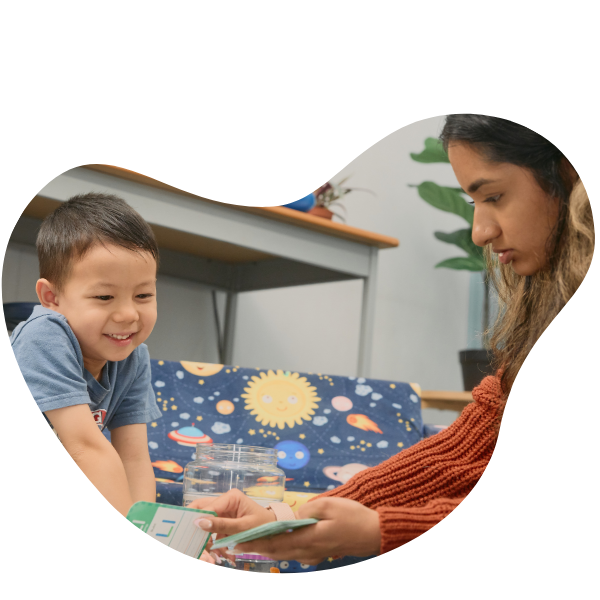
School Support for Children with Learning and Brain-Based Differences
Whether your child is struggling with reading, writing, math, attention, organization, behaviour, or confidence, this knowledge hub brings together practical guidance, resources, and expert advice to help you understand your options and support your child at every stage of their educational journey.
Understanding the BC School System
Navigating the school system can feel overwhelming. Learn how schools in British Columbia support learners with learning and brain-based differences, understand the roles of educators and support staff, and discover the resources available to help your child succeed.
Learn MoreEducational Plans
Learn how Individual Education Plans (IEPs), Student Learning Plans (SLPs), and other school-based planning tools support learners in British Columbia. Understand when these plans are used, what they include, and how parents and guardians can work with schools throughout the process.
Learn MoreMinistry Designations
Understand BC Ministry of Education designations, who may qualify, and how they can impact the supports and funding available at school. Learn what the designation process involves and what to expect along the way.
Learn MoreSchool Accommodations
Discover the classroom accommodations that can help learners access the curriculum and demonstrate their knowledge more effectively. Learn about common accommodations and how they support different learning and brain-based differences.
Learn MoreWorking with Teachers
Strong partnerships between families and educators can make a meaningful difference. Find practical strategies for communicating with teachers, sharing concerns, celebrating successes, and working together to support your child’s learning.
Learn MoreTransition Planning
School transitions can bring both opportunities and challenges. Explore strategies to help your child prepare for important changes, whether they’re starting elementary school, transitioning to high school, or preparing for life after graduation.
Learn MoreSchool Based Team
Learn how School-Based Teams work in British Columbia, who is involved, and what to expect during the referral and meeting process. Discover how these collaborative teams help identify supports and plan for your child’s success.
Learn MoreEnglish Language Learners
Learn how English Language Learning (ELL) supports learners who are developing English proficiency. Understand how ELL services work in BC schools, what support may be available, and how families can help their child succeed both at school and at home.
Learn MorePeople Also Ask
Each program page also includes testimonies from families that have participated in those programs. If you would like more specific references, please contact us.
Our instruction programs follow our unique Research-informed Individualized Student Education (RISE) approach to meet each learner’s needs. You can learn more about our RISE approach here.
Our carefully designed RISE programs are multi-curricula-based, incorporating Orton-Gillingham as one of many approaches. This approach achieves the most effective, individualized support for each learner. Our multi-year studies conducted with UBC show that our K-12 students are catching up to their general classroom peers on average by up to ½ grade level per year, with significant increases in self-confidence and self-esteem.
Read Beyond Orton-Gillingham – Personalized Learning for Your Child.
All our programs start with an application so we can ensure a great fit between learners, instructors, and programs. An application does not guarantee a placement, but it does start an individualized intake process.
- Complete an application online via the Programs link on our site (feel free to call us if you have trouble navigating the application form). In the application, you’ll provide information on location (including online), timing and other preferences.
- Book an intake meeting to review your application and supporting educational documents about the learner.
- Our team matches instructors and learners to meet the learner’s needs, schedule, and location requirements.
- We send a placement offer via email that will be open for a certain period of time. You will confirm the placement and sign off that you’ve reviewed our policies and procedures.
- Log in to your Teachworks account to view your schedule and update your personal or billing information.
- Begin your program!
Our academic partnerships enable us to deliver programs grounded in the latest education research and drawing from various curricula to provide effective individualized support to individuals with learning differences. Such collaborative work has led to program innovations, such as using social robotics and other leading-edge assistive technologies that create ongoing opportunities for lasting change in education.
Our academic partners include:
- Holland Bloorview Kids Rehabilitation Hospital PEARL
- UBC Faculty of Medicine – Occupational Science and Occupational Therapy
- UBC Faculty of Education – Psychological Services and Counselling Training Centre
- UBC Faculty of Education – Educational and Counselling Psychology, and Special Education
After filling out an online application, you will receive an email with an invitation to book an intake meeting. Intake meetings take place on Zoom or in person.
For RISE One-to-One and other group programs, our team will speak with you about your child’s strengths and stretches, take a history of learning challenges, get to know your family better, and verify the information you provided in your application. This meeting takes up to an hour.
Following the intake meeting, our team will review the educational documents and all other information you have provided. We then carefully match each learner with a specialized instructor based on learning needs and scheduling requirements. We follow up with you on a session schedule, assist with funding applications if needed, and introduce you to your child’s profile on our learning platform.
For Adult Learning and other youth and adult programs, we will verify the information shared on the application, ask about learning history, preferences, and goals, and discuss the next steps in the placement process. This meeting takes up to 30 minutes.
Following the intake meeting, we email a copy of our program policies, along with a list of next steps. We then review the application and any documents shared to carefully match the learner with a specialized instructor. We send placement offers via email, and once the placement is confirmed, the learner gains access to their profile and schedule on our learning platform.
We are pleased to receive your application on an ongoing basis.
Placements for our RISE One-to-One program for each academic year (September to June) open in spring and continue until April. Placements for summer (July and August) open in early spring.
Placements for our Adult Learning program are open all year, with placement renewals for each academic year (September to June) and summer (July and August).
Placements for other programs may vary; please see our programs page or subscribe to our newsletter for details.
We do not require any diagnosis or formal assessment to enroll in our programs.
Our programs run through the academic school year (September to June) with a summer session (July and August). How long a learner attends a program depends on their learning profile and goals. Some learners may require multiple years of explicit instruction to achieve a desired skill level or independence in learning.
Group programs vary in length.
Yes, LDS offers group programs, including:
Social Explorers (grades 4-5 and 6-7) a neuroaffirming social communication group developed and led by a Speech-Language Pathologist giving students the opportunity to practice social skills, emotional and personal development, and build friendships.
Camps (grades 3-6), customized and creative week-long Vancouver summer camps focused on helping students with learning differences develop new skills through fun, hands-on camp programs with high instructor-to-camper ratio.
Teen Mentorship (ages 15-21), a neuroaffirming program designed to empower teens with self-advocacy skills, practical job search tools, an employment profile, and workplace readiness in a supportive environment.
Learn more: Group program page
We offer a holistic approach to academic and social-emotional development to ensure all individuals, ages 3 to adult, have the skills and confidence they need to realize their full potential.
We offer one-to-one individualized instruction, assessments to identify strengths and areas of growth, assistive technology services, professional development and training, and guidance and support sessions.
Check out our program listing to learn more.
Research-informed, individualized, one-to-one instruction is one of the most effective ways to support learning.
Our unique Research-Informed Individualized Student Education (RISE) approach offers one-to-one specialized support, aligning with the needs of individuals with learning differences. Our instructors create programs tailored to each learner’s strengths and needs, monitoring progress and adjusting goals and strategies as needed to help them learn, develop, and succeed.
We do not provide diagnostic assessments; however, we do offer formal and informal assessments that can give insight into an individual’s learning profile.
We offer “Level A” assessments, which are informal assessments for reading, writing, spelling, math, and more. Informal assessments are run within our programs throughout the year.
We also offer “Level B” assessments, which are formal assessments, including the *KTEA-3 and **BRIEF. These psychological or educational assessments provide in-depth information about an individual’s cognitive, academic, or behavioural functions. In some situations, we can refer individuals with specific learning profiles for psychoeducational or neuropsychology assessments through our partners at UBC PSCTC.
*KTEA-3: Kauffman Test of Academic Achievement [academic skills]
**BRIEF: Behaviour Rating Inventory of Executive Function [executive function skills]
Learning differences affect each individual differently, and many factors can influence how they impact daily life or learning. If an individual consistently faces challenges with reading, writing, math, focus, memory, organization, or following instructions, despite immense effort and support, it could be a sign of a learning difference. Some common signs include:
- Taking longer to complete tasks, especially literacy or math tasks
- Difficulty following multi-step directions
- Challenges with focus, time management, or organization
- Trouble remembering what was just read or heard
- Avoidance or frustration with academic-based activities, work, or schoolwork.
For ongoing challenges that impact daily life or learning, a formal assessment can provide clarity, identify strengths and areas for growth, and help identify appropriate supports. Assessments are typically done by doctors, psychologists, or learning specialists.
Learning differences are the unique ways that people process information. The term is a strengths-based shift from “learning disability,” acknowledging the rich and diverse ways that people learn.
The term “learning disability” was first introduced in 1963. It refers to brain-based differences that impact how a person learns, understands, applies, organizes, and evaluates verbal and nonverbal information. Examples of learning disabilities include dyslexia (reading), dysgraphia (writing), dyscalculia (math), dyspraxia (movement), and auditory processing disorder. While Attention-Deficit/Hyperactivity Disorder (ADHD), Autism Spectrum Disorder (ASD), and other neurological diagnoses are not classified as learning disabilities, they are brain-based differences that affect how a person processes information.
While diagnosing or naming a disability can be empowering and open doors to support, for some, the term “learning disability” can be stigmatizing, meaning it comes with a set of negative attitudes or beliefs about a person or group of people. This is why, outside of medical and academic settings, “learning difference” is the preferred term.
Progress monitoring is a key aspect of our one-to-one instruction program. Once your child has begun sessions and completed informal and standardized assessments with their instructor, we create a learning plan to map out goals and share them with you via your child’s case manager. After each session, your child’s instructor will write a session snapshot outlining the session activities and how the session went. You can access this information through our program software.
In January, we send a mid-year progress report to families to share their child’s academic, social, and emotional learning progress. Following this, we may update your child’s learning plan. End-of-year reporting is provided in June and July. We can share these reports with your child’s teachers, school, or other professionals working with your family, in accordance with our holistic service principle.
We do not require students and families to provide any diagnosis or formal assessment to enroll in our programs. We are pleased to assist families by providing informal and formal assessments, and through a partnership with UBC PSCTC, we can also refer current learners with specific learning profiles for a formal psychoeducational or neuropsychology assessment.
Our RISE One-to-One program runs year-round to help your child build academic skills that are transferable to classroom learning. Some students require multiple years of explicit instruction to move back up to grade level or work independently.
We believe research-informed, individualized, one-to-one instruction is the most effective way to support your child’s learning. Research shows that students with learning differences need one-to-one specialized support that meets their specific learning strengths and stretches. Our unique Research-informed Individualized Student Education (RISE) proven methodology meets the needs of each student. We adjust learning goals and strategies as your child progresses through our programming to help them learn, develop, and succeed.
Working with our 19+ technology company partners, Lightwell carefully integrates assistive technologies (AT) into our programs to enhance student learning and further the accessibility and inclusiveness of our support. Examples of AT integrated into our lessons include software and hardware that enable visual organization of information, visual and auditory feedback of text, writing assistance, and screen-based reading enhancement. We also innovatively incorporate socially assistive robots into our lessons, working with our partner, the University of Waterloo, with remarkable success in increasing student engagement and social-emotional learning.
Our case managers form a critical part of our carefully matched learning support team for each student. Working together with our support team and other specialists on staff, our case managers develop an individualized learning program for each student. This program identifies learning goals, curricula, and resources, including assistive technologies, as appropriate, that our instructors use to address specific skill gaps and learning needs.
Throughout the year, the case manager assigned to each learner provides a consistent first point of contact for students and families and, together with our instructor, develops assessments, progress monitoring, and reporting to ensure each student achieves sustained progress in their learning and development.
Identifying a learning difference (LD) can be challenging, especially at an early age. Some of the common signs that an individual may have a learning difference include:
- Difficulty in reading and/or writing
- Challenges with math
- Distractedness and/or memory lapses
- Challenges following multi-stage directions
- Clumsiness
- Challenges with telling time
- Difficulty staying organized
Formal assessments, such as psychoeducational evaluations (sometimes called “psych-eds”), can provide a formal diagnosis of an LD or other learning challenges, but they may be subject to long wait times and costs. We offer other helpful assessments in-house, often called “Level B” assessments, such as KTEA-3, and we can also refer our students with specific learning profiles for psychoeducational assessments or neuropsychology assessments through our partners at UBC PSCTC.
The term “learning disability” was first introduced in 1963 and refers to brain-based differences that impact an individual’s ability to acquire, organize, retain, understand or use verbal and non-verbal information. Examples include dyslexia (reading), dysgraphia (writing), dyscalculia (math), dyspraxia (movement), auditory processing or other processing disorders. While ADHD (attention deficit and hyperactivity disorder), ASD (autism spectrum disorder), and other executive function challenges are not necessarily classified as learning disabilities, they are brain-based differences that may cause differences in how a person acquires, retains and learns information.
For some, the term “learning disability” can have negative connotations or stigma, suggesting an individual weakness. For others, naming or diagnosing a disability as such can be empowering or allow access to other resources or services.
Outside of medical or academic settings, the common preference now is to use the term “learning difference” or “neurodivergent,” which has the same meaning but recognizes the individualized nature of learning and allows more space to recognize differences as potential strengths. Wherever possible, we use the term “learning difference” to highlight the rich and diverse ways individuals learn.