
Articles
Understanding Learning Plans in BC: SLPs and IEPs
If your child needs extra support at school, you may hear terms such as Student Learning Plan (SLP) or Individual Education Plan (IEP). Here are the basics BC parents should know.
Learn More
Have you ever walked into a room and forgotten why you went there? Put off starting a task even though you knew it was important? Or felt overwhelmed trying to decide what to do first?
These everyday situations rely on executive function skills.
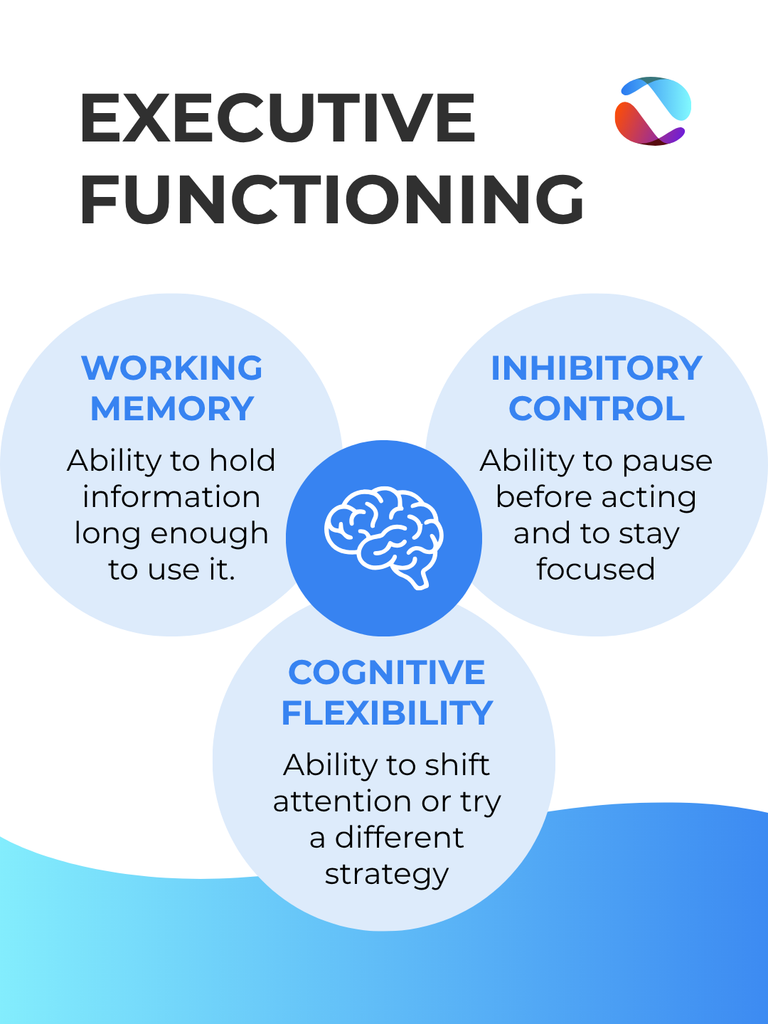
Executive function refers to mental skills that help us manage information, focus our attention, control our responses, adapt when things change, and work toward a goal.
The Center on the Developing Child at Harvard University compares executive function to an air traffic control system in the brain. Just as air traffic controllers coordinate many planes at once, our executive function skills help us manage multiple pieces of information, priorities, distractions, and decisions.
There are three core areas of executive functioning:
These skills develop gradually through childhood, adolescence, and early adulthood. Children are not born with fully developed executive function skills; they build them through experience, practice, and support.
While challenges with executive functioning don’t automatically mean someone has ADHD, understanding your or your child’s executive functioning profile can help you find appropriate support. Assessments like the BRIEF can help, and professionals with different skill sets can provide support depending on your needs.
Executive functioning and ADHD are closely connected.
ADHD is a neurodevelopmental condition. It’s characterized by persistent patterns of inattention and/or hyperactivity and impulsivity that interfere with functioning or development.
Many people with ADHD experience challenges with executive function. These might look like:
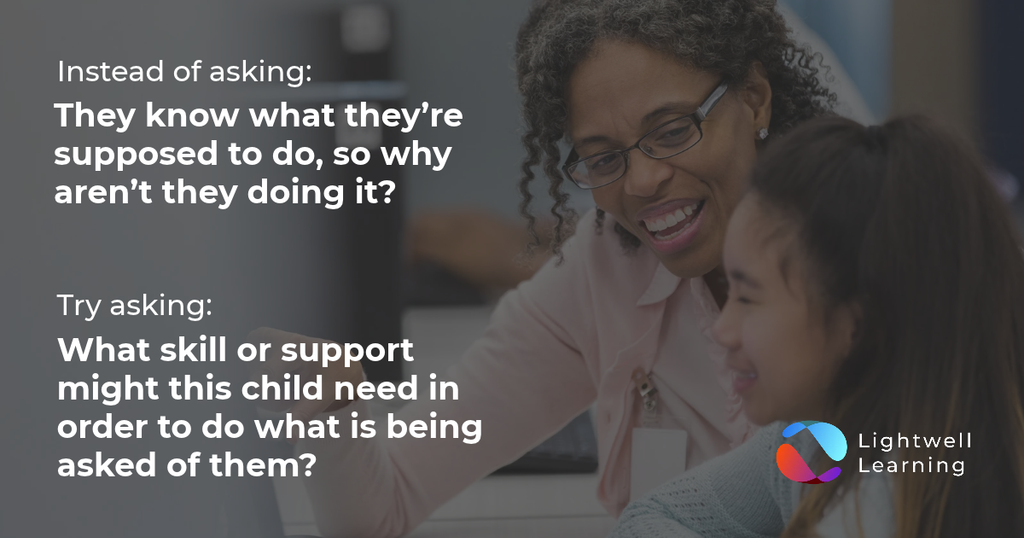
These behaviours may prompt parents to ask, “They know what they’re supposed to do, so why aren’t they doing it?”
But a more useful question is: “What skill or support might this child need in order to do what is being asked of them?”
Understanding executive functioning can help us look beyond behaviour. Executive function challenges do not automatically mean someone has ADHD. Developmental or mental health conditions, learning differences, sleep, stress, and other factors can also affect executive functioning.
If difficulties are persistent and interfere with everyday life, a professional assessment can help clarify what’s happening.
Executive function skills can be supported and strengthened.
For children, this happens gradually. Adults can provide structure and support, then gradually step back as children become more independent.
Instead of asking a child to “try harder,” we can teach skills and adjust the environment so demands are manageable as skills develop.
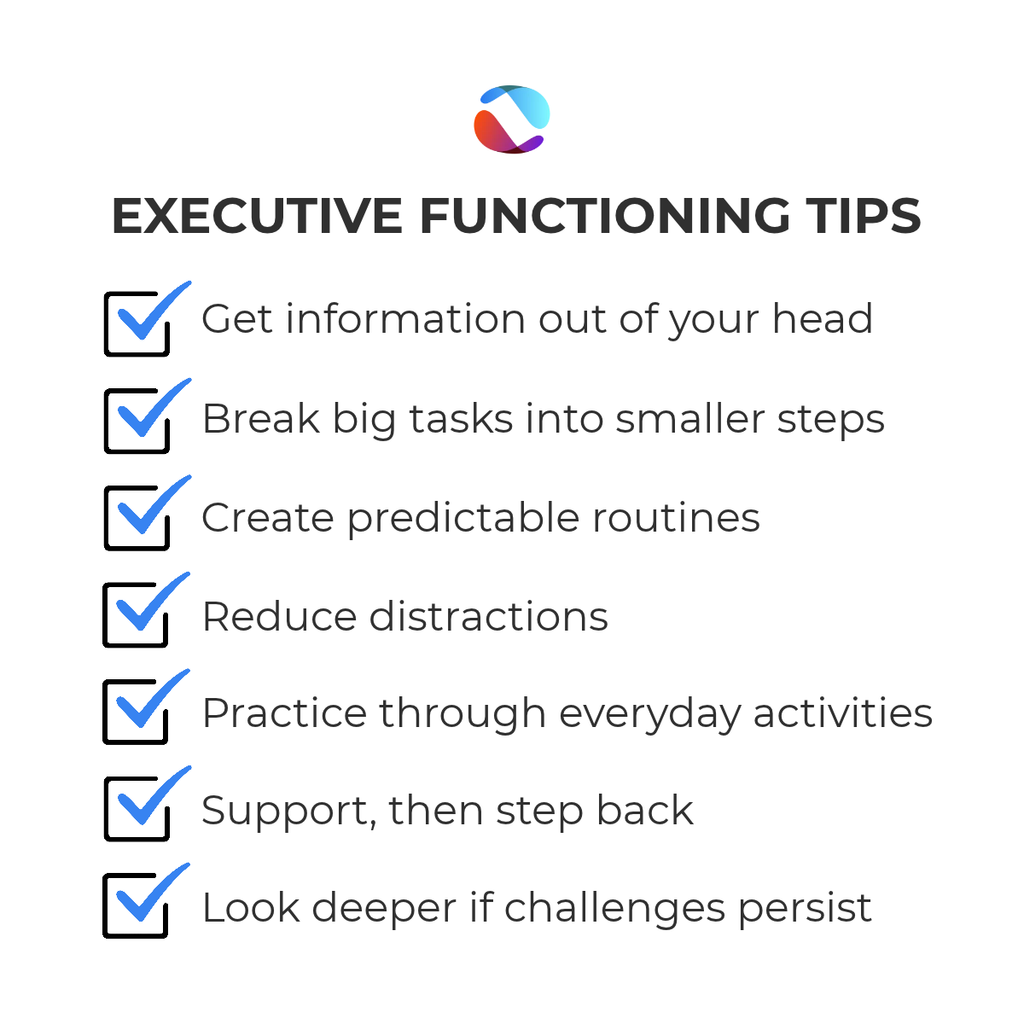
Small changes can make a meaningful difference:
Yes. Executive function development doesn’t stop when we become adults.
For adults, support may involve developing systems rather than expecting them to manage everything internally. That might mean using calendars and automated reminders, creating routines, breaking projects into smaller steps, or working with a professional to develop individualized strategies.
Although building these skills is generally easier when strong foundations form earlier in life, research shows that adults can keep learning and strengthening skills related to planning, self-control, and flexibility. For adults, support may involve developing systems that work with their brain rather than expecting them to remember and manage everything internally. Research on adult capabilities shows that adults can continue learning and strengthening skills related to planning, focus, self-control, awareness, and flexibility.
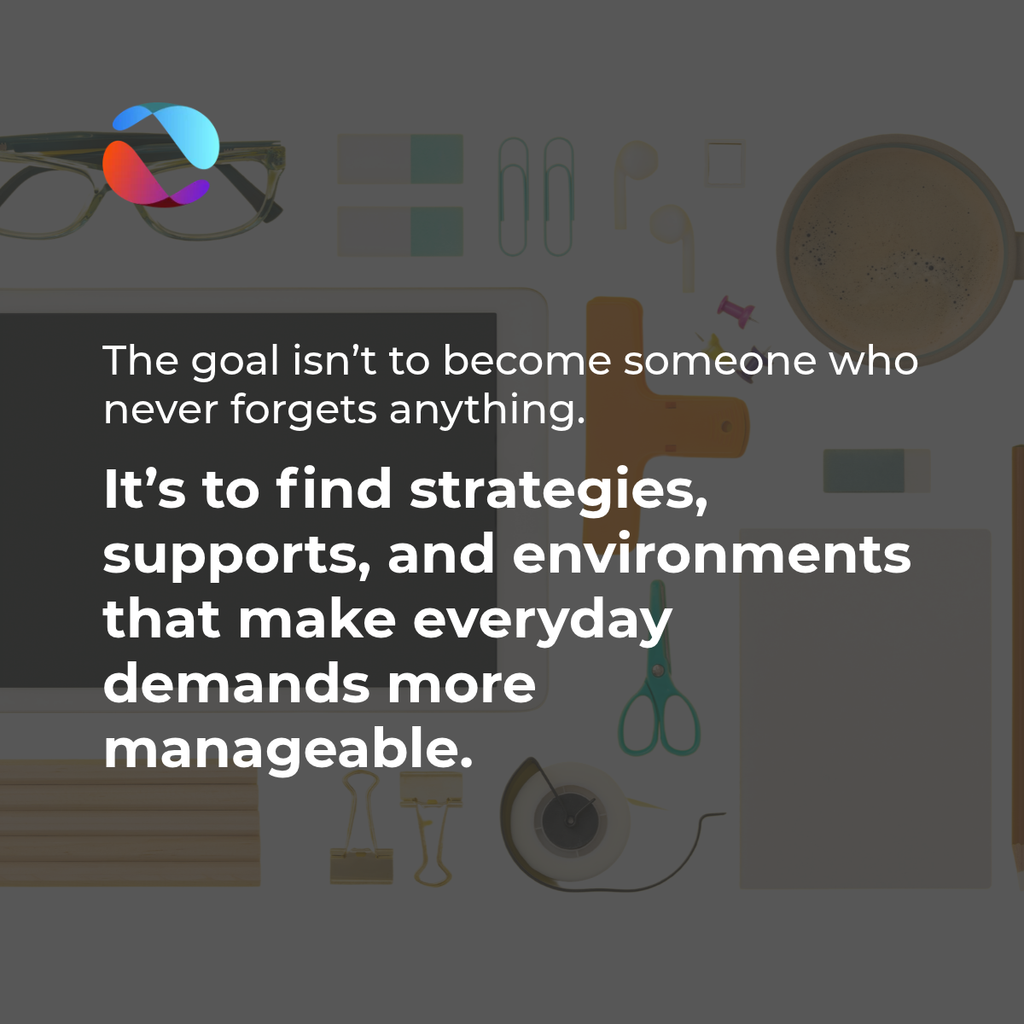
The goal isn’t to become someone who never forgets anything. It’s to find strategies, supports, and environments that make everyday demands more manageable.
Yes. One commonly used tool is the Behaviour Rating Inventory of Executive Function (BRIEF).
The BRIEF looks at how executive function shows up in everyday life. For school-age children, the BRIEF-2 can gather information from parents, teachers, and—when appropriate, depending on age—the young person. It examines working memory, inhibition, emotional control, planning, and more. The results can help identify patterns, strengths, and challenges, and can be used to inform recommendations for support. Other versions of BRIEF are designed for younger children and adults.
However, the BRIEF is not an ADHD diagnostic test. ADHD diagnosis requires a broader clinical assessment that considers symptoms, developmental and medical history, and other possible explanations for what the individual is experiencing.
Maybe, but first think about what you or your child actually needs help with.
Different professionals provide different kinds of support. For example, a learning specialist may integrate executive function strategies into academic work. Meanwhile, a counsellor or therapist can help with emotional regulation and maintaining healthy relationships. A psychologist or other qualified clinician can help assess and identify whether ADHD, a learning difference, or something else is contributing to difficulties. Physicians may be involved with diagnosis and treatment too.
Important: “Coach” is not a regulated health profession in BC. Ask potential providers about their qualifications, experience, approach, and how they measure progress.
Learn more about the difference between ADHD Coaching and Adult Learning Support.
Start by looking at the whole picture. Avoid relying on one behaviour or questionnaire.
For a child, consider talking with their teacher and healthcare provider. Ask what they’re seeing across different environments and whether the difficulties are interfering with learning, routines, and relationships.
In BC, a family doctor or pediatrician is a helpful starting point. There is no single blood test, brain scan, or questionnaire that diagnoses ADHD. Assessments typically cover everything from symptoms and medical history to school and learning. Parent and teacher rating scales are also commonly used.
Remember: you don’t need to wait for a diagnosis to start engaging with executive functioning support.
Executive function challenges and ADHD tell us something about where a person needs support, but they don’t tell us everything about a person.
Research examining the lived experiences of adults with ADHD has identified self-reported strengths such as creativity, divergent thinking, and the ability to focus intensely on areas of interest.
A strengths-based approach means recognizing both sides: ADHD and executive function challenges can create very real barriers, but the person experiencing them also has abilities worth recognizing and developing.
Support the challenges. Build the skills. And don’t lose sight of the whole person.
By Sofia Lopez-Nakashima, Senior Manager, Assessments
We are a community of dedicated professionals who write collaboratively. We recognize the contribution of unnamed team members for their wisdom and input.
Center on the Developing Child at Harvard University. A Guide to Executive Function.
Center on the Developing Child at Harvard University. (2014). Enhancing and Practicing Executive Function Skills with Children from Infancy to Adolescence.
Center on the Developing Child at Harvard University. (2017). Building the Skills Adults Need for Life: A Guide for Practitioners.
HealthLink BC. Attention Deficit Hyperactivity Disorder (ADHD).
PAR, Inc. Behavior Rating Inventory of Executive Function, Second Edition (BRIEF2).
Sedgwick, J. A., Merwood, A., & Asherson, P. (2019). The positive aspects of attention deficit hyperactivity disorder: A qualitative investigation of successful adults with ADHD. ADHD Attention Deficit and Hyperactivity Disorders, 11, 241–253.
Nordby, E. S., Guribye, F., Nordgreen, T., & Lundervold, A. J. (2023). Silver linings of ADHD: A thematic analysis of adults’ positive experiences with living with ADHD. BMJ Open, 13, e072052.
Receive our bi-weekly Arise newseltter which includes resources, updates, stories, events, and more.
If your child needs extra support at school, you may hear terms such as Student Learning Plan (SLP) or Individual Education Plan (IEP). Here are the basics BC parents should know.
Learn More
English Language Learning, commonly called ELL, refers to supports and services for students who are developing the English-language skills needed to participate successfully in school.
Learn More
Our name is changing. The people, expertise, programs, and commitment behind our work are not.
On September 2, 2026, Learn. Develop. Succeed. becomes Lightwell Learning.